
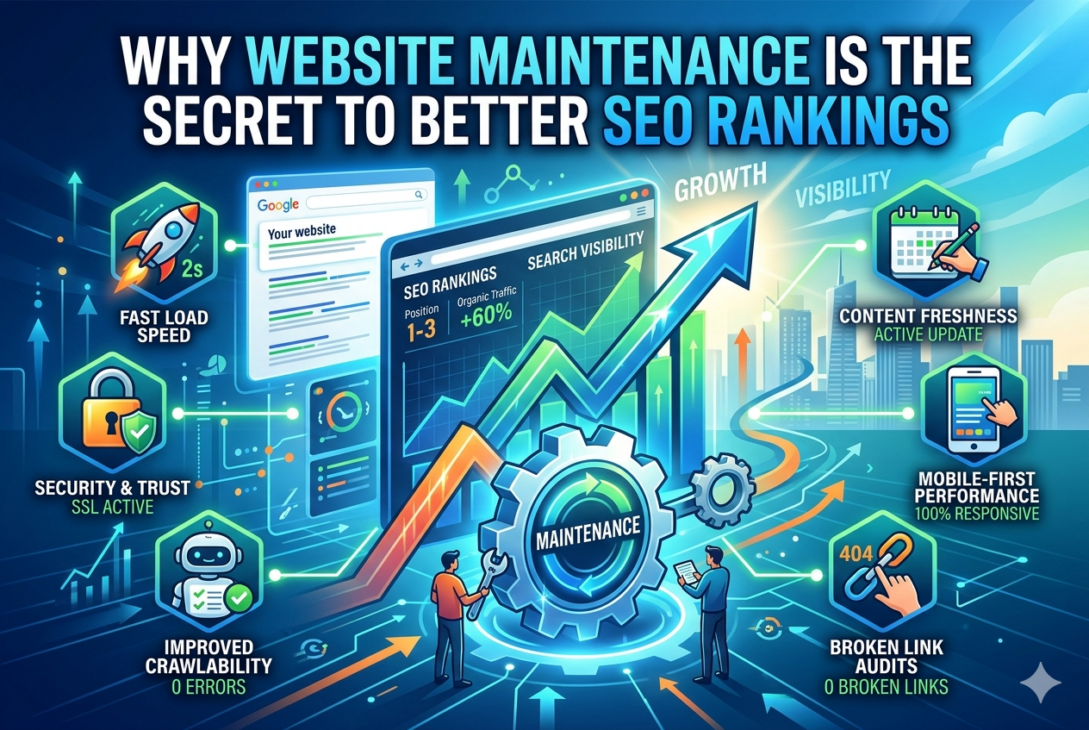
Many business owners believe that once a website is launched, the hard work is over. They invest heavily in a beautiful design and high-quality content, then wait for the traffic to pour in. However, the digital landscape is not static.
Search engine optimization (SEO) is often viewed through the lens of keywords and backlinks. While these are vital, they sit on a foundation of technical health. Without regular website maintenance, even the best content can disappear from search results.
In this guide, we will explore why consistent upkeep is the “secret sauce” for higher rankings. We will look at the technical mechanics that keep Google happy and users engaged.
The Technical Backbone of SEO
Google’s primary goal is to provide users with the best possible experience. If your site is slow, broken, or insecure, Google will hesitate to recommend it. Maintenance ensures your technical infrastructure remains a competitive advantage rather than a liability.
Maximizing Page Speed and Performance
Page speed is a confirmed ranking factor in Google’s algorithm. Every second a user waits for your site to load increases the probability that they will “bounce” back to the search results.
Regular maintenance involves cleaning up database clutter and optimizing large media files. Over time, websites accumulate “code bloat” from unused plugins or outdated scripts. Keeping your CMS and plugins updated ensures you are using the most efficient versions available.
Ensuring Security and User Trust
Security is no longer optional for SEO. Google prioritizes sites that use HTTPS encryption. Maintenance involves the routine renewal of SSL certificates and patching software vulnerabilities.
If your site is neglected, it becomes a target for malware. If Google detects a security breach, it will display a “red flag” warning to potential visitors. This effectively kills your organic traffic and destroys your brand’s reputation in seconds.

Improving Crawlability and Indexing
Search engine bots, or “crawlers,” are constantly scanning the web to understand what your pages are about. If these bots encounter roadblocks, your rankings will suffer.
Fixing Broken Links and 404 Errors
Broken links are a silent killer of SEO rankings. They frustrate users and signal to search engines that a site is poorly managed. Routine audits help identify and fix these 404 errors quickly.
When you remove a page or change a URL, you must implement proper 301 redirects. Regular maintenance tasks include checking both internal and external links to ensure the “link juice” flows correctly throughout your site.
XML Sitemap and Robots.txt Review
An XML sitemap acts as a roadmap for search engines. It tells them which pages are most important. During a maintenance cycle, you should verify that your sitemap is accurate and reflects your current site structure.
Similarly, your robots.txt file must be checked to ensure you aren’t accidentally blocking Google from indexing vital sections of your site. Small errors in these files can lead to massive drops in visibility.
The Power of Content Freshness
Google has a “freshness” component in its ranking algorithm. It prefers content that is active, relevant, and frequently updated. A static site is often perceived as a dying site.
Re-optimizing Older Posts
Maintenance isn’t just about code; it’s about content. High-performing articles from two years ago may need a refresh to stay relevant. This involves updating statistics, adding new insights, and re-targeting modern keywords.
Statistics suggest that sites performing routine content refreshes can see organic traffic grow significantly faster than those that remain stagnant. It shows both users and bots that your information is current and reliable.
Mobile-First Performance
We now live in a mobile-first world. Google primarily uses the mobile version of a website for indexing and ranking. A site that looks great on a desktop but breaks on a smartphone will never reach the top of the SERPs.
Responsive Design Stability
Operating systems and mobile browsers update constantly. A layout that worked perfectly six months ago might have “element overlap” issues on the latest iPhone update.
Ongoing maintenance involves testing your site across various devices and screen sizes. This ensures that buttons remain clickable and text remains legible, maintaining a high Core Web Vitals score.
Key Maintenance Tasks for SEO Ranking
To help you organize your workflow, here is a breakdown of essential tasks and their direct impact on your SEO.
| Task | SEO Impact |
| Plugin & CMS Updates | Prevents security breaches and eliminates performance lags. |
| Broken Link Audits | Preserves your crawl budget and improves the user journey. |
| Image Compression | Boosts page load speeds, a core ranking metric. |
| Content Refreshes | Re-optimizes older posts for new keywords and current trends. |
| Database Optimization | Reduces server response time for faster overall browsing. |
Why Maintenance is an Investment, Not a Cost
Many view website maintenance as an annoying recurring expense. In reality, it is a form of insurance for your digital marketing efforts.
Avoiding the “Car” Analogy
Think of your website like a high-performance vehicle. If you never change the oil or check the brakes, it will eventually break down. A broken website is a liability that costs you leads and sales.
Consistent attention ensures that your site remains competitive. As your competitors’ sites slow down or break over time, your maintained site will naturally climb the rankings due to its reliability and superior user experience.
“SEO cannot be a ‘set it and forget it’ strategy. It requires continuous attention to ensure your website remains competitive, visible, and relevant.” — ZAG Interactive
Conclusion: Take Action for Higher Rankings
Website maintenance is the invisible force behind successful SEO. By prioritizing speed, security, and content freshness, you create an environment where search engines feel confident sending their users.
Don’t let your hard work go to waste by neglecting the technical health of your site. Start by performing a full site audit this week. Check your loading times, fix your broken links, and ensure your software is up to date.
If you find this process overwhelming, consider partnering with a professional team to handle the technical heavy lifting. A healthy website is the first step toward dominating the search results and growing your business online.