If you think about children’s dental health, you may think every dental problem could be treated in a routine visit with your dentist. Even though general dentists are largely responsible for keeping kids’ smiles healthy, some cases will require the expertise of a pediatric oral surgeon. Knowing the distinction between emergency care for patients and urgent dental treatment can help parents make quick, confident decisions when their child is in pain or has an injury or issue that may affect proper growth and development.
As someone with years of experience working with children’s dental cases, one thing becomes very clear over time: timing matters. Early treatment can prevent permanent damage, reduce pain, and avoid more complicated procedures later in life. The challenge for many parents is knowing when a routine dental concern crosses the line into something more specialized.
The following guide explains how pediatric oral surgery differs from general dentistry, which symptoms parents should look for, and why seeking early treatment can safeguard a child’s lifelong health.
Definition of General Dentistry
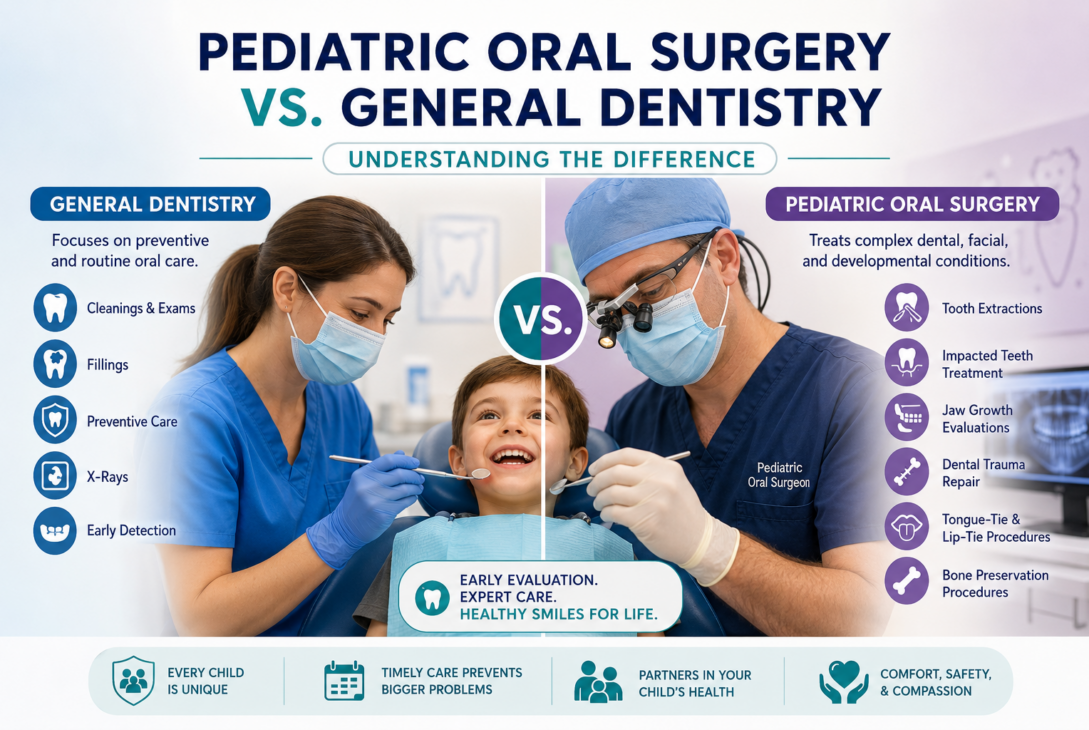
General dentist: A generalist who focuses on preventive and routine oral care. These professionals ensure that children have healthy teeth and gums by scheduling regular cleanings, exams, fillings, fluoride treatments, and cavity prevention.
Families generally see a dental professional for the first time when baby teeth start poking through. These appointments are crucial as they identify decay at an early stage, provide insight into jaw growth, and promote good oral hygiene habits in children well before their adult teeth arrive.
General dentists commonly treat:
- Cavities
- Minor gum irritation
- Plaque buildup
- Basic tooth sensitivity
- Preventive care needs
- Routine x-rays and exams
They also identify issues that might need a specialist. In the case of a more complex dental problem, surgical or developmental in nature, the patient needs to be referred to an oral surgery specialist.
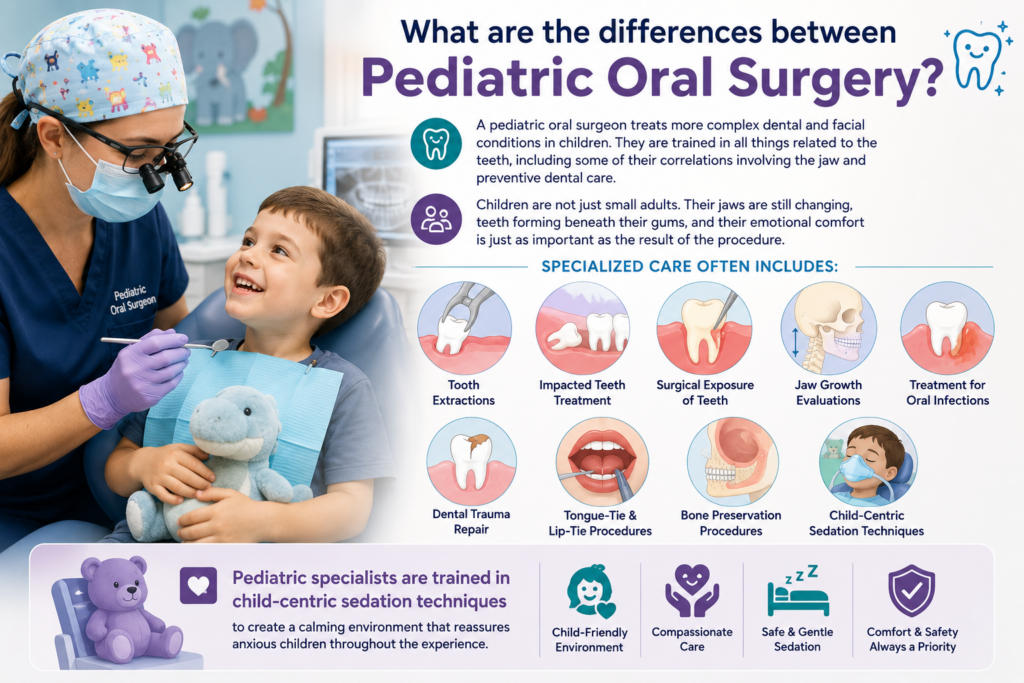
What are the differences between Pediatric Oral Surgery?
A pediatric oral surgeon treats more complex dental and facial conditions in children. They are trained in all things related to the teeth, including some of their correlations involving the jaw and preventive dental care.
When it comes to oral surgery, children are not just small adults. Their jaws are still changing, teeth forming beneath their gums, and their emotional comfort while undergoing treatment is just as important as the result of the procedure.
This specialized care often includes:
- Tooth extractions
- Impacted teeth treatment
- Surgical exposure of teeth
- Jaw growth evaluations
- Treatment for oral infections
- Dental trauma repair
- Tongue-tie and lip-tie procedures
- Bone preservation procedures
Pediatric specialists are trained in child-centric sedation techniques to create a calming environment that reassures anxious children throughout the experience.
Persistent Pain and Swelling Should Never Be Ignored
Persistent pain or swelling of the facial region is one of the most obvious indicators that a child requires specialized surgical treatment. Cavities and teething can cause discomfort, but persistent symptoms may indicate underlying infections or abscesses.
Many parents think swelling will go away on its own, but a child’s immune system and jaw structure are still developing, so infections can spread rapidly.
Surgical treatment is required for abscess cases, cases of severe decay, and swelling that wrinkles the face. Prompt treatment can save adjacent teeth, prevent/delay bone destruction, and spare the patient from experiencing an emergency.
Dental evaluation on the same day is urgent if pain is accompanied by fever and visible swelling.
Early Dental Care For Impacted Or Delayed Teeth
Some kids have delayed tooth eruption and impacted teeth that are stuck under the gums. When old baby teeth do not loosen naturally, they can impede the proper development of permanent teeth that will replace them.
This can lead to:
- Severe crowding
- Bite misalignment
- Twisted tooth positioning
- Long-term orthodontic complications
If baby teeth do not fall out early enough, they may need surgical removal so that permanent teeth can come in properly. In many situations, a preventive method will spare the individual from orthodontic treatment as they get older.
Supernumerary teeth, or extra teeth during a child’s eruption period, can similarly cause problems by disrupting the normal eruptive schedule. The teeth you are born with but may not show up until later in life, so these hidden missing teeth often become evident by X-ray at your comprehensive exam and may need surgical extraction before the position of adjacent teeth adjust and move about to accommodate that future impaction.
Dental Injuries Often Require Surgical Expertise
Kids are energetic, so dental injuries happen often. Accidents such as falls, sports injuries, and playground crashes can cause significant harm to teeth and jaws.
A generalist can treat small chips or minor cracks, but severe injuries may necessitate oral surgery.
Common trauma cases include:
- Knocked-out teeth
- Broken roots
- Jaw fractures
- Deep gum injuries
- Displaced teeth
In the event of a dental trauma, timing is of the essence. However, teeth reimplanted right away have a significantly higher success rate when treated after hours.
This means that parents can never go wrong by taking children for immediate care after serious injuries to the teeth, or by ‘storing’ any dislodged or knocked-out teeth in milk while en route to the dentist’s surgery.
Tongue-Ties and Lip-Ties Impact Much More Than Speech
Tongue-ties and lip-ties occur when tissue that is meant to be flexible limits your mouth movement. Some of these can affect breastfeeding, speech development, swallowing, and sometimes even the spacing of teeth.
For little kids, a straightforward surgical release known as a frenectomy can help oral function substantially.
Possible signs of oral restrictions include:
- Difficulty breastfeeding
- Delayed speech development
- Mouth breathing
- Trouble pronouncing sounds
- Large front tooth gaps
When early treatment is possible, children commonly have easier feeding, can develop speech more effectively, and have healthy oral development.
Jaw Growth Problems Need Interactive Monitoring
Not every dental issue involves the teeth by themselves. Others have jaw growth problems that change the way they bite, breathe or balance facial features.
They can assess anything from overbites and underbites to issues that arise when jaw development is uneven, and all of these concerns often need to be addressed long before braces enter the picture.
Specialists treat children to encourage jaw growth when bones still can be shaped — that treatment is most effective at a young age. Not seeking treatment for an extended period could make things much more difficult to treat as the affected person reaches their teenage years.
Parents should watch out for symptoms such as:
- Difficulty chewing
- Chronic mouth breathing
- Snoring
- Facial asymmetry
- Speech difficulties
To this end, these signs might infer basic formative issues that merit an early, careful assessment.
The Importance of Early Detection
Among the biggest benefits of frequent dental visits is early detection. Cysts, impacted teeth, or unusual growths could be present before symptoms occur and are often visible only on routine X-rays.
The absence of treatment for these conditions led them to secretly and gradually damage the bone and adjoining teeth.
When caught early, it is usually easier, less invasive, and more successful to treat. It is the type of preventive monitoring that allows specialists to save healthy tooth structure and avoid much more complex follow-up in the future.
What To Expect During A Visit For Pediatric Oral Surgery?
Parents fear how their child will manage during surgery, but pediatric-specific practices are structured to keep kids anxious and secure.
A typical visit may include:
- Gentle examination
- Digital imaging or X-rays
- Sedation options for anxiety
- Customized treatment planning
- Recovery instructions for parents
The vast majority of procedures are performed as day surgery, with many children back to their usual activities within a day or so.
FAQs
How do you determine whether or not a child needs an oral surgery specialist?
Impacted teeth, severe or nonresponsive infections, dental trauma, jaw growth issues, and cleft states or tongue-ties are prevalent in the Korean generation.
Is tooth extraction part of general dentistry?
People do know that general dentists usually perform simple extractions, but not complicated ones that require surgical expertise.
I am wondering if oral surgery for kids is safe?
Yes. Pediatric professionals utilize child-centered approaches and sedation practices.
What does an impacted tooth look like?
Impaction is suggested by delayed eruption, crowding, swelling, or adult teeth that are growing behind baby teeth.
Is tongue-tie treatment painful?
Most frenectomies are quick, easy procedures with minimal pain (especially when treated early).
Helping Children Build Strong, Healthy Smiles
When parents face such concerns, knowing the difference between general dentistry and pediatric oral surgery can serve them well. Routine dental care is an important part of prevention, but when problems involve development, trauma, infections, or impacted teeth, specialized surgical care may be needed.
The sooner you take action, the more straightforward the treatment will be, the quicker the recovery, and the better the long-term outcomes. When you recognize the warning signs and seek care soon, you can help prevent problems with your child’s smile, comfort, and confidence in more ways than one for years to come.