Dataverse is that your website is generally the first point of contact for prospective customers with your company. In fact, it determines whether a visitor stays on your website, explores what you have to offer, and, in most cases, becomes a customer. As businesses grow, one question frequently comes up: Should you invest in a custom website or choose a template-based design?
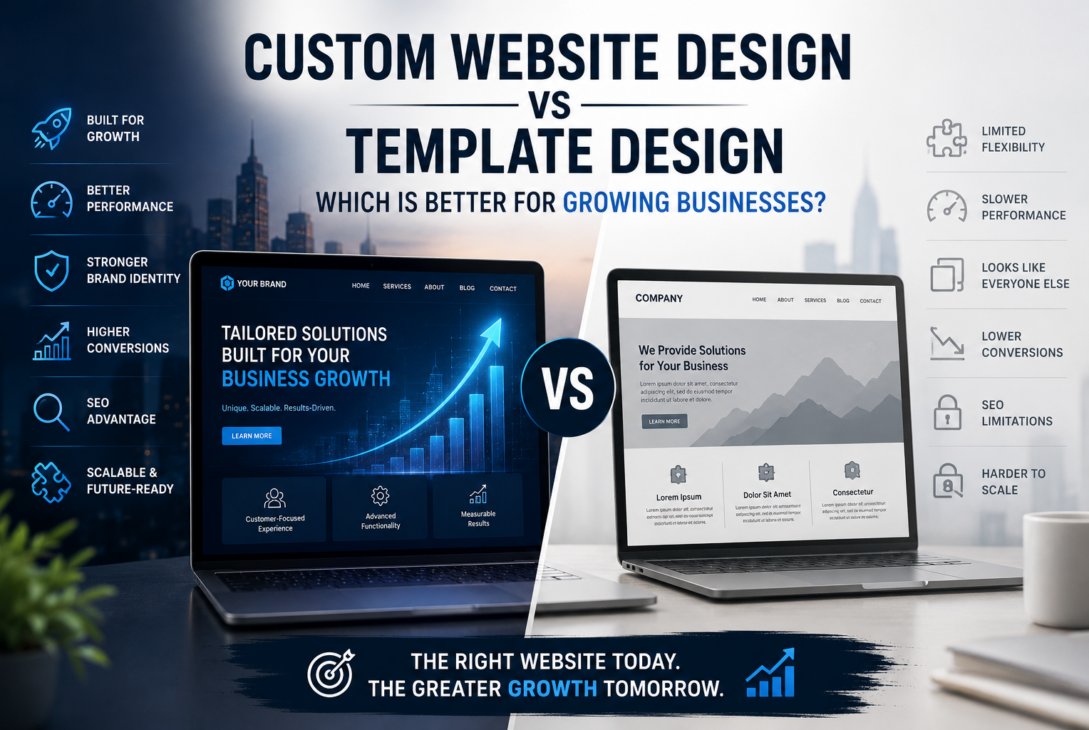
The two options can both be used to create an online presence, but were designed with very different objectives in mind. While a template site is fast and inexpensive, a custom website design is built with your brand, customer journey flow, and long-term company goals in mind.
There are subtle yet significant differences between the two methods that, if understood, can unlock valuable startup growth opportunities and save you from making a costly limitation-based investment down the track.
Understanding the Difference Between Custom and Template Websites
They are designed for mass production and offer greater flexibility in color, images, and content. The framework is already in place, so businesses can get websites up and running quickly, at a lower upfront cost.
In contrast, a bespoke site is custom-built and developed, tailored to the specifications of your business. Every single feature, layout, navigation, and functionality is engineered for specific business goals and customer requirements. This is a bit more capital-intensive up front, but provides so much more flexibility and value in the long run.
Just like you either wear a ready-made suit or get one tailored according to your measurements. One or the other can do the trick, but only one fits like a glove.
Why Website Performance Matters
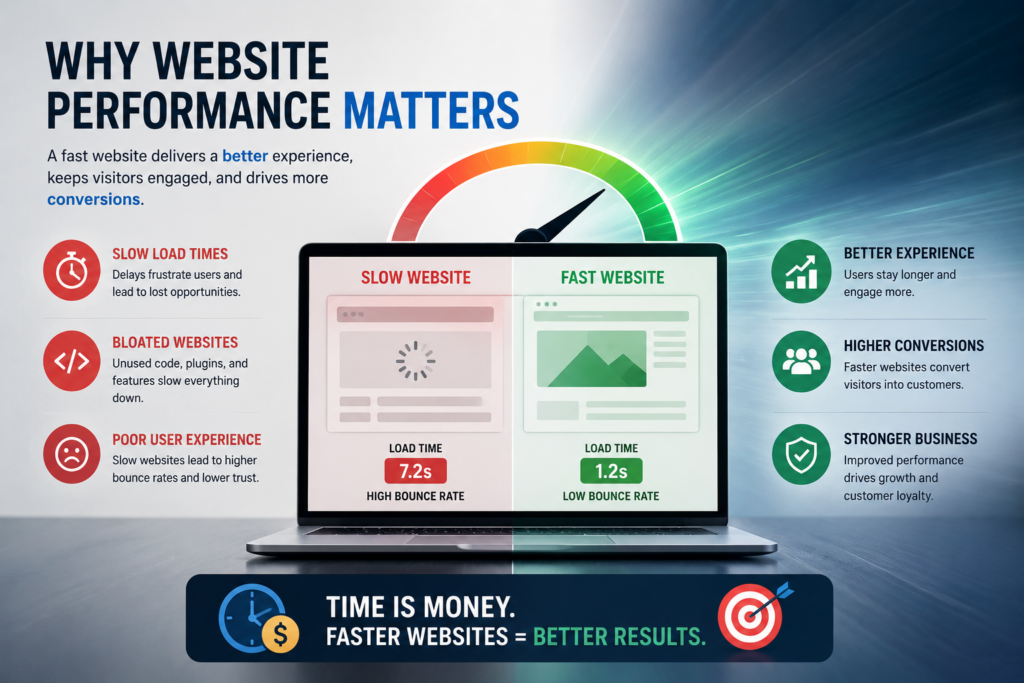
Website speed has recently become a major factor in user experience. Visitors want the page to load quickly, and a delay can mean lost opportunities.
They also tend to include unused code, plugins, and features that affect performance. These bloated elements slow page load times, resulting in a less seamless browsing experience for the user.
This is especially true for custom-built websites, where only the required functionality is developed. This delivers a more streamlined experience, ultimately enhancing speed, responsiveness, and performance. Visitors stay on faster websites longer and usually convert better.
Time is money for scaling companies. So, how exactly can it directly impact customer retention and lead generation?
Building a Stronger Brand Identity
Among the primary challenges of online business is find-me. Template-based websites look almost indistinguishable from each other, and customers go to dozens of websites a day.
A bespoke website enables businesses to design a digital experience that is unique and wholly aligned with their brand personality, values, and positioning. Everything you see can be created to build trust and awareness.
If customers can remember your site, then they will be more likely to come back. It is said that an individual’s online presence can establish credibility, helping you build a stronger bond with your audience.
For this reason, many companies eventually find themselves in a position where they must turn to a web design company, as generic solutions no longer work because such designs do not align with their brand needs, values, and future goals.
Scalability for Future Growth
What works for your business today may not work in a year.
The evolution of any organization may require new functionality, such as advanced contact forms, customer portals, appointment booking systems, eCommerce implementation & integration with existing systems, or complex, personalized user experiences.
Template websites can be limiting in such cases. Most businesses that use them find that adding new features requires hacks, costly plugins, or even a complete redesign.
Custom development is scalable. You can implement new features as your business evolves without sacrificing performance or user experience.
Scalability is one of the strongest arguments for custom web development, especially for companies that plan to grow over the long term.
Conversion Optimization and Business Results
Drawing visitors is just one piece of the puzzle. The true objective is to turn those visitors into leads, inquiries, appointments, or sales.
Template Websites Only Meet 50% of Businesses. House Templates restrict businesses in certain ways regarding predefined layouts and user flows. However, these structures may fulfill their functions but differ from what your customers want when they interact with your brand.
Custom sites may be built with highly effective conversion strategies in mind. This includes strategically placing CTAs, optimizing navigation, creating simple, short, yet effective forms, and personalizing user journeys.
If each design decision is based on how the customer will feel or respond, then often businesses see higher engagement and conversion.
A website is not just for looking good; it should help you grow your business.
SEO Advantages of Custom Development
Search visibility continues to be one of the greatest long-standing traffic sources. A well-ranking website can attract high-quality leads without having to spend on paid ads.
When it comes to modifying your SEO and improving user experience, custom sites offer more technical flexibility. Developers can write clean code structures, increase page speed, improve site architecture, and implement advanced schema markup as needed.
Template websites can offer basic optimisation options, though these are often limited and may affect performance or search rankings.
A custom website usually provides the additional SEO opportunities necessary for long-term businesses that view their websites as a sustainable marketing asset.
When a Template Website Actually Makes Sense
Template websites are not necessarily a bad thing. In fact, they can be quite useful in some situations.
Small businesses working with limited budgets, basic informational websites, or a short timeline for launching might find that templates meet their engagement requirements for the time being. They’re also useful for temporary campaigns or microsites, or projects lacking advanced functionality.
Templates offer brands, particularly for startups testing an idea, a quick, easily accessible and inexpensive route to market.
The trick is learning that templates are more of a short-term simplicity, rather than a long-term scaling mechanism.
When Custom Design is the More Cost-Effective Option
Sustainable Growth: Usually, sustainable growth leads businesses to a point where Customization is imperative.
In situations when a business needs advanced functionality, anticipates significant growth, manages heavy content loads, and handles sensitive information, it will almost always choose the greater customizability of a custom website.
While this usually requires a higher upfront cost, the long-term gains often offset it. You could see that with better performance, stronger branding, and improved scalability, you may also have an enhanced conversion potential — all of which can deliver measurable return on investment (ROI) over time.
Frequently Asked Questions
Is a custom website worth the higher cost?
For growing businesses, a tailored website typically offers more long-term value in performance, flexibility, and conversion opportunities. Although this incurs a larger initial investment, you will face fewer redesign costs, and the solution is more flexible to your growing business needs.
How long does a custom website take to build?
Development timelines differ based on app complexity, features, and content requirements. Custom projects usually take a few weeks to a couple of months.
Are template websites better for search engine ranking?
Can outdated template websites rank in search results? Yes, but their technical limitations can also put complex optimization one step behind customized solutions.
What is the best approach to scaling a business?
Custom website development is typically more scalable, as you can build on an existing platform by adding features, integrating with other tools, and extending functionality.
Honest approaches for picking a new website that aids growth
At the end of it all, as you prepare for your website design launch, deciding between custom and template is contingent on what works best for your goals. A template website might be sufficient to go live if you only need a non-functional online presence.
But if you want to create a visible, strong brand, earn conversions, build search visibility, or, more basically, have the platform your website needs to grow with your company, I must say custom web development has the upper hand. Well, your website should be more than just a digital brochure; it needs to be an essential tool that can drive growth, establish authority and ultimately make the work of converting visitors into customers a trusted resource for years to come.