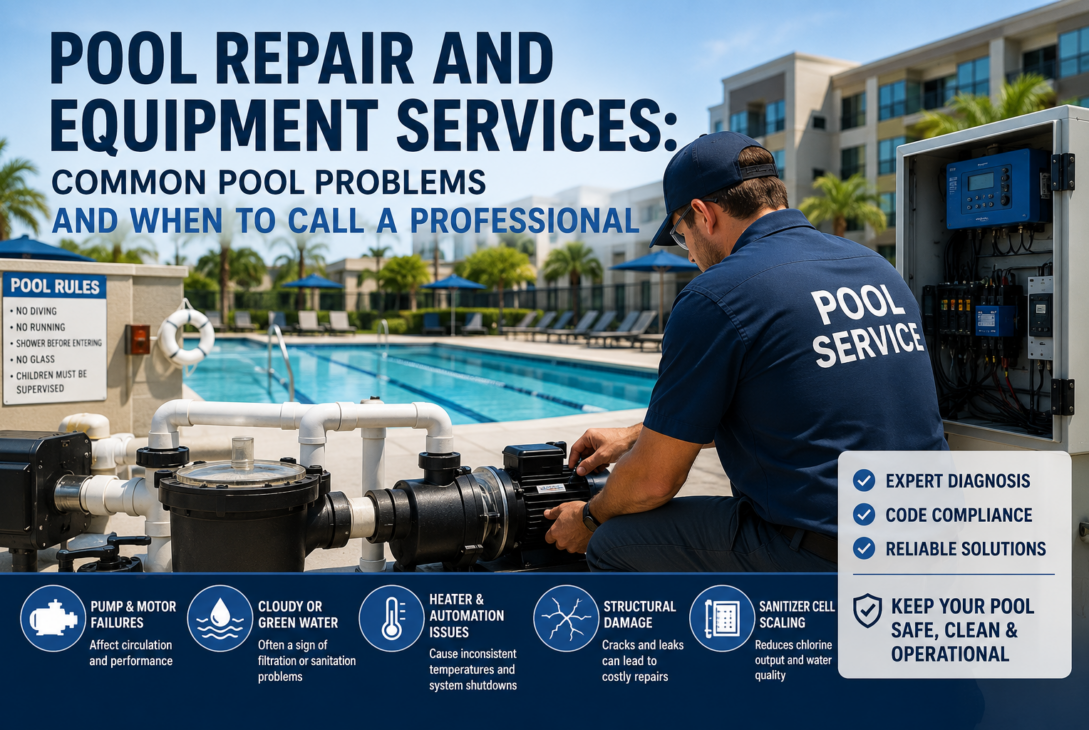
Running a hotel, apartment complex, gym, or HOA pool means juggling more than water chemistry. Heavy-duty pumps, commercial-grade filtration, and code-mandated safety systems all have to work together, every single day. When something breaks, downtime isn’t just inconvenient — it can mean lost revenue, unhappy residents, or a facility that fails inspection.
That’s where commercial pool repair services come in. Knowing which problems you can monitor internally, and which ones call for a licensed technician, keeps your facility open, compliant, and safe for swimmers.
Common Pool Problems in Commercial Facilities
Commercial pools run longer hours and serve far more swimmers than a backyard pool, so their equipment wears down faster and fails in different ways. Here are the issues facility managers see most often.
Pump and Motor Failures
Loud screeching, grinding noises, or a pump that won’t prime usually points to worn bearings, a failing seal, or a damaged impeller. Since commercial systems often run multiple pumps to handle higher bather loads, a single failure can throw off circulation for the entire pool. Prompt commercial pool pump repair prevents a small mechanical issue from turning into a full system replacement.
Cloudy or Green Water
Persistent murkiness or a sudden algae bloom, even after chemical adjustments, often signals a clogged filter, weak circulation, or a sanitation system that isn’t keeping pace with demand. In high-traffic commercial pools, this is one of the fastest ways to trigger a health department closure.
Heater and Automation Issues
Commercial heaters that short-cycle or fail to ignite are frequently dealing with mineral scaling, corrosion, or a faulty gas valve. Automation panels can also misfire, shutting the system down at random or applying incorrect freeze-protection settings during off-hours.
Structural Damage and Cracks
Cracked concrete, chipped coping, or loose tile isn’t just cosmetic. These issues let water seep into the surrounding soil, which can shift the pool shell over time and lead to far more expensive repairs.
Sanitizer Cell Scaling
Salt chlorine generators and automated chlorinators are common in commercial settings because they reduce daily manual dosing. But calcium scaling on the internal plates can quietly stop chlorine production, leaving water under-sanitized without an obvious warning sign.
When to Call a Professional Commercial Pool Repair Company
Some repairs are safe to handle with in-house maintenance staff. Others carry real safety and liability risk, and belong with a licensed commercial pool repair company.
Complex Electrical Work
Underwater lighting, wet equipment pads, and control panel rewiring all sit close to water, which raises the stakes significantly. These jobs require a professional who understands both electrical code and pool-specific safety standards.
Underground Plumbing Leaks
Rapid water loss usually means a leak somewhere in the underground plumbing. Locating it without tearing up the entire deck requires pressure testing and specialized listening equipment, tools most facilities don’t keep on hand.
Gas Line and Heater Calibrations
Gas line repairs, flow rate checks, and internal heater component replacement involve combustible materials. This work should always go to a licensed technician trained in commercial gas systems.
Acid Washing and Resurfacing
Fully draining a commercial pool to scrape away calcium scaling, clear stubborn algae, or repair structural cracks is a job for specialists. Done incorrectly, an empty pool shell can actually float out of the ground due to groundwater pressure.
Unresolved Water Quality Problems
When routine shocking and chemical adjustments stop working, the root cause is often a filtration bottleneck or an undersized piece of equipment. A professional diagnostic can pinpoint the issue instead of leaving staff to guess.
Commercial Pool Equipment Replacement: Repair or Replace?
Not every issue calls for a full replacement, but equipment does have a shelf life. Pumps, heaters, and filtration systems in constant commercial use typically need replacing sooner than their residential counterparts. A qualified technician can assess whether a repair will hold up under heavy use or whether commercial pool equipment replacement is the more cost-effective long-term choice.
Staying ahead of commercial swimming pool maintenance with scheduled inspections makes this decision easier, since problems get caught while they’re still minor and repairable.
Choosing a Reliable Service Provider
Before signing a service contract, ask a few direct questions to avoid predatory practices like unnecessary chemical treatments or inflated deep-cleaning recommendations:
- Will you share explicit water test results after every visit?
- Can you provide a detailed, upfront cost estimate before starting work?
- Does your standard service package clearly itemize skimming, brushing, vacuuming, and chemical balancing?
A reputable commercial pool equipment repair provider will answer these questions without hesitation and put the details in writing.
It’s also worth confirming that any provider follows current health and safety guidance, such as the CDC’s Model Aquatic Health Code, which sets the baseline for safe operation at public and commercial pools.
Keep Your Commercial Pool Running Year-Round
Commercial pools don’t get the luxury of downtime. Catching equipment problems early, and knowing which repairs need a licensed professional, protects both your swimmers and your bottom line.
If your facility is dealing with pump issues, water quality problems, or aging equipment, don’t wait for a small issue to become a costly one. Reach out to a trusted commercial pool repair services provider today to schedule an inspection and keep your pool open, safe, and compliant.