Anyone who lives in or visits South Florida knows the unwritten rule of stepping outside: within five minutes, your carefully blow-dried hair has absorbed air moisture, doubled in size, or reverted into unpredictable frizz. Florida’s tropical climate brings endless sunshine, ocean breezes, and near-constant humidity that challenges even the most resilient hair types.
Understanding why humidity behaves the way it does on human hair strands and adjusting your color choices, salon treatments, and home care routines accordingly yhis the secret to restoring effortlessness to your daily style. Here is a deep dive into the science of moisture-heavy air, how to safeguard your hair, and why low-maintenance hair care strategies are dominating South Florida beauty culture today.
The Science: What Humidity Actually Does to Hair Strands
To outsmart humidity, you first need to understand the structural chemistry of hair. Human hair is primarily composed of keratin proteins held together by two main types of chemical bonds: strong disulfide bonds (which determine your permanent hair pattern) and temporary hydrogen bonds (which break and reset when hair gets wet or is heat-styled).
When atmospheric humidity levels rise, dry or porous hair acts like a sponge. It actively absorbs moisture directly from the humid air. As water molecules penetrate the outer cuticle and enter the inner cortex, hydrogen bonds continuously break and reform in random patterns.
This reaction causes the hair shaft to swell unevenly. The result? Straight hair loses its sleek shape and turns limp or wavy; naturally wavy or curly hair frizzes into irregular textures; and color-treated hair looks dry, dull, and unmanageable.
Key Takeaway: Frizz is simply your hair’s desperate plea for hydration. When strands lack moisture internally, they reach out into the humid atmosphere to grab it, disturbing the outer cuticle layer in the process.
How Sun, Salt, and Humidity Impact Hair Color
Florida’s climate delivers a triple challenge to colored hair: heavy humidity, intense ultraviolet (UV) radiation, and frequent exposure to salt water or pool chlorine.
When solar UV rays break down synthetic and natural hair pigments while high humidity forces the cuticle layer to remain slightly open, color oxidation happens at an accelerated rate. This explains why rich brunettes turn brassy or orange, cool blondes shift to yellow, and bright reds fade far faster in South Florida than in cooler, dryer climates. Protecting your hair color requires choosing smart techniques designed specifically for sunny, coastal environments.
Strategic Solutions: Smart Hair Techniques for Coastal Living
1. Transition to Low-Maintenance Hair Color
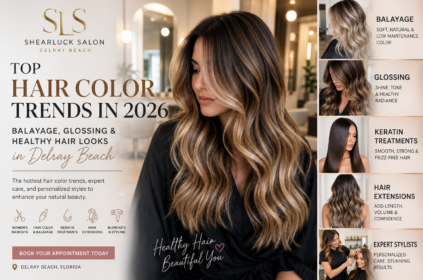
If you are tired of visible root lines after just two weeks or brassiness taking over by week three, modern hair color strategies offer a long-term cure. Requesting low maintenance hair color in Delray Beach allows you to embrace dimensional techniques like lived-in balayage, soft shadow roots, and custom glossing.
By seamlessly blending your natural root shade into hand-painted highlights, your color grows out gracefully without stark contrast lines. A rich, dimensional base withstands sun exposure and climate swelling far better than single-process block colors, extending time between salon visits while maintaining a polished look.
2. The Power of Smoothing & Keratin Treatments
When topical serums fail against 90% humidity, professional in-salon treatments provide the structural shield your hair needs. Modern, formaldehyde-free keratin treatments infuse vital protein back into compromised cuticles, effectively sealing the outer layer shut.
This protective barrier prevents atmospheric water from penetrating the inner cortex. It locks in smooth texture, restores radiant shine, and reduces daily blowout time significantly all while keeping your natural volume intact.
3. Modern Hair Color Trends 2026: Working with Natural Texture
The top hair color trends 2026 focus on organic dimension, rich shine, and movement that works with natural texture rather than fighting against it. High-maintenance, ultra-solid colors are giving way to “sun-baked blondes,” “cinnamon espresso brunettes,” and soft dimensional glosses. These multi-tonal shades reflect light beautifully, making humidity-induced waves look intentionally styled rather than unruly.
Daily At-Home Defense Strategy
- Switch to Sulfate-Free, Moisture-Rich Cleansers: Harsh sulfates strip hair of essential natural oils, raising the cuticle and inviting humidity in. Creamy, hydrating formulas keep cuticles lying flat.
- Incorporate Weekly Deep Conditioning Masks: Replenish lost lipids and fatty acids once a week to satisfy your hair’s internal hydration needs.
- Apply UV & Heat Protectant Leave-Ins: Never step into the Florida sun without an invisible layer of UV defense. Treat leave-in protectants with the same importance as skin sunscreen.
- Seal with Lightweight Anti-Humidity Oils: Natural oils like argan or jojoba coat the exterior of the hair shaft, repelling atmospheric moisture without weighing hair down.
Frequently Asked Questions (FAQs)
Q1: How do I find the best hair color in Delray Beach for humid weather?
Look for experienced local colorists who specialize in dimensional coloring and lived-in techniques. A skilled professional will consider your natural growth patterns, lifestyle, and local climate factors to formulate custom shades that resist brassiness and grow out smoothly.
Q2: Why does my hair frizz instantly when searching for a hair salon near me in Florida?
Florida air carries dense, moisture-laden air. If your hair lacks internal moisture or has porous cuticles, it absorbs atmospheric water immediately. This breaks internal hydrogen bonds, causing individual strands to swell into frizz. Professional hydrating routines and cuticle-sealing treatments solve this underlying issue.
Q3: What makes low maintenance hair color in Delray Beach ideal for tropical climates?
Low-maintenance techniques like balayage and root shadowing use your natural root shade as an anchor. Because UV light and moisture naturally alter hair tones over time, softer transitions make color shifts and growth virtually seamless.
Q4: Are keratin treatments safe for color-treated hair in high humidity?
Yes. Modern, formaldehyde-free keratin smoothing treatments are highly recommended for color-treated hair. They seal pigment inside the hair shaft, guarding against color wash-out and sun fading while smoothing out climate-induced frizz.
Q5: What are the emerging hair color trends 2026 for coastal living?
Trends in 2026 emphasize lived-in dimension, glossy warm blondes, rich golden brunettes, and soft natural balayage. The priority is high-shine, low-maintenance color that enhances natural texture and holds up well against coastal elements.
Q6: How often should I get a hair treatment if I live in South Florida?
In-salon deep conditioning masks are ideal monthly, while professional keratin or smoothing treatments generally last 3 to 5 months depending on washing frequency and aftercare habits.
Ready to Tame the Frizz and Transform Your Look?
Don’t let South Florida humidity dictate your hair day. Experience premier styling, custom color formulations, and transformative care at ShearLuck Salon in Delray Beach. Our expert team is ready to craft your perfect, humidity-proof style.
👉 Book Your Appointment at ShearLuck Salon Today