
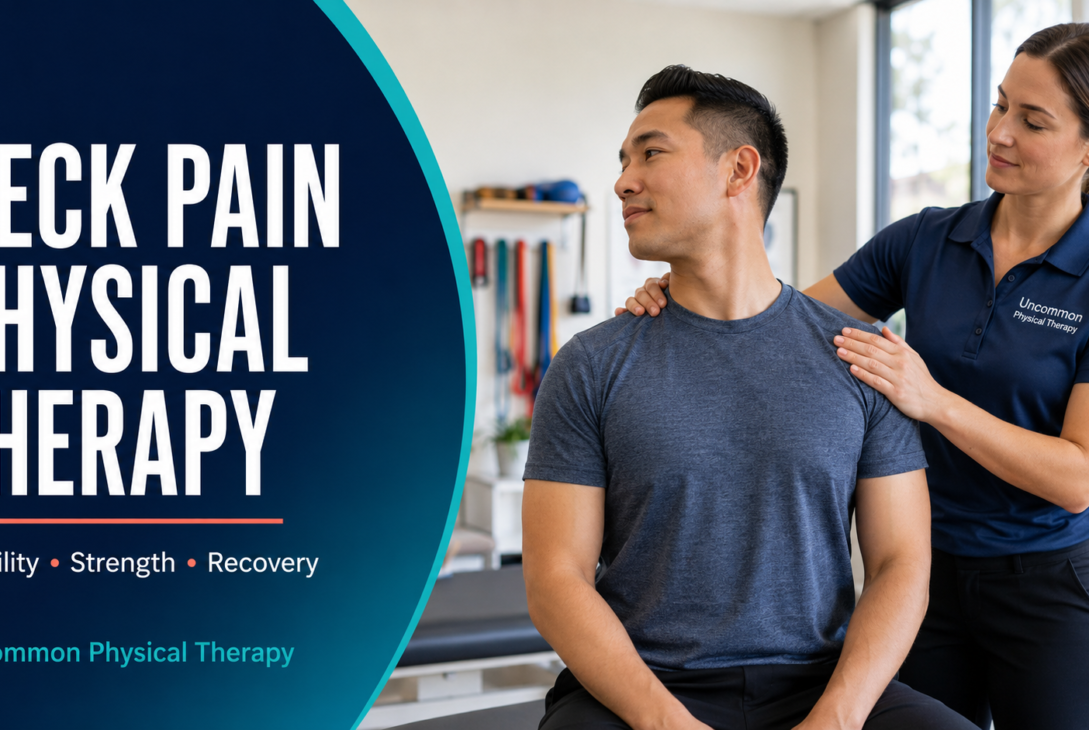
Neck pain can affect much more than the ability to turn your head. It may make driving, sleeping, reading, working at a computer, exercising, or carrying everyday items uncomfortable.
Some people experience a mild ache after sitting for a long time. Others develop stiffness, headaches, muscle spasms, arm symptoms, or pain after an injury.
The right treatment depends on the cause, symptom pattern, medical history, and effect on daily movement. Neck Pain Physical Therapy may help selected patients reduce movement limits, build strength, manage symptoms, and return gradually to normal activities.
Treatment should begin with an individual assessment. A physical therapist can examine the neck, shoulders, upper back, nerves, and movement habits before creating a plan.
Understanding the Neck
The neck, also called the cervical spine, contains seven vertebrae. These bones support the head and protect the upper portion of the spinal cord.
The area also includes:
- Spinal discs
- Small joints between the vertebrae
- Ligaments
- Muscles
- Tendons
- Nerve roots
- The spinal cord
- Blood vessels
- Connections with the shoulders and upper back
The neck must provide both movement and stability. It allows the head to turn, bend, look upward, and move during daily tasks.
Because many structures work together in a small area, neck symptoms may be affected by the shoulders, upper back, jaw, work position, sleep habits, or nerve irritation.
The American Academy of Orthopaedic Surgeons notes that neck pain may involve muscles, ligaments, nerves, bones, or spinal discs. This is one reason an assessment matters before treatment begins.
What Does Neck Pain Feel Like?
Neck symptoms vary from person to person.
They may include:
- Aching or soreness
- Stiffness
- Muscle tightness
- Pain when turning the head
- Pain when looking up or down
- Headaches
- Muscle spasms
- Tenderness around the neck or shoulders
- Pain between the shoulder blades
- Pain traveling into an arm
- Tingling or numbness
- Arm or hand weakness
- Difficulty finding a comfortable sleep position
- Reduced tolerance for desk work or driving
The location of pain does not always identify the exact source. For example, a neck problem may cause symptoms in the shoulder or arm, while a shoulder problem may increase tension around the neck.
A physical therapist may screen both areas when the symptoms overlap.
Common Causes of Neck Pain
Neck pain is not one condition. Several problems can create similar symptoms.
Muscle Strain
Muscles may become sore after:
- Prolonged computer work
- Repeated lifting
- A sudden increase in exercise
- An awkward sleep position
- Looking down for long periods
- Carrying a heavy bag
- Repetitive work tasks
- Stress-related muscle tension
A strain may cause tightness, tenderness, or pain during movement. Many mild strains improve with time, sensible activity changes, and guided movement.
Neck Sprain
A sprain affects the ligaments that support the cervical joints. It may occur after a sudden movement, fall, sports injury, or vehicle collision.
Symptoms may include stiffness, pain, headaches, and discomfort that increases with movement.
A traumatic neck injury should be assessed before the patient begins exercises independently.
Cervical Disc Problems
Spinal discs sit between the vertebrae and help manage load.
A disc may change with age or become irritated following injury. A bulging or herniated disc may cause local neck pain or irritate a nearby nerve root.
Disc findings on an MRI do not always explain a person’s symptoms. A provider should compare imaging with the history, examination, strength, sensation, and symptom behavior.
Cervical Radiculopathy
Cervical radiculopathy is often called a pinched nerve in the neck.
It may cause:
- Neck pain
- Shoulder-blade pain
- Pain traveling down an arm
- Tingling
- Numbness
- Weakness
- Changes in reflexes
The AAOS guide to cervical radiculopathy explains that physical therapy may use specific exercises to address pain, strength, and neck movement. Some patients may also be considered for carefully selected traction.
Progressive weakness or worsening neurological symptoms require medical assessment.
Cervical Spondylosis
Cervical spondylosis describes age-related changes in the discs and joints of the neck.
These changes are common and do not always cause pain. When symptoms are present, a person may experience stiffness, aching, reduced motion, headaches, or arm symptoms.
The AAOS cervical spondylosis guide lists physical therapy among common nonsurgical treatment options. Exercises may be used to stretch or strengthen selected muscles, and posture or traction may be considered in some cases.
Whiplash
Whiplash may occur when the head moves rapidly backward and forward, often during a vehicle collision.
Symptoms can include:
- Neck pain
- Stiffness
- Headaches
- Shoulder pain
- Dizziness
- Difficulty concentrating
- Sensitivity to movement
Symptoms may begin immediately or develop later. A person should seek medical care after a major collision, especially when there is severe pain, loss of consciousness, weakness, numbness, confusion, or difficulty walking.
Headaches Related to the Neck
Some headaches may be affected by joints, muscles, or movement in the neck. These are sometimes called cervicogenic headaches.
Symptoms may begin around the upper neck or back of the head and travel toward the forehead or eye. Neck movement or a prolonged position may increase the pain.
The ChoosePT guide to headaches explains that physical therapists may use neck-mobility work, manual therapy, posture changes, and exercise for selected headache presentations.
Headaches can also have causes unrelated to the neck. New, severe, or unusual headaches require proper medical evaluation.
When Should You Consider Neck Physical Therapy?
Neck Physical Therapy may be appropriate when symptoms affect movement, sleep, work, exercise, or daily tasks.
Consider an evaluation when:
- Pain lasts longer than expected
- Stiffness keeps returning
- Turning the head while driving is difficult
- Desk work increases symptoms
- Sleep is regularly disturbed
- Headaches appear connected to neck movement or position
- Pain travels toward the shoulder or arm
- You are recovering from an injury
- You are recovering from neck surgery
- You have stopped activities because of fear or discomfort
- A physician recommends rehabilitation
- A previous treatment plan did not restore normal function
Early assessment may help identify movement, strength, or nerve findings that need attention.
When Neck Pain Requires Prompt Medical Care
Routine Physical Therapy for Neck Pain is not the correct first step for every problem.
Seek emergency or prompt medical care when neck pain occurs with:
- A serious fall, collision, or direct injury
- New arm or leg weakness
- Loss of coordination
- Trouble walking
- Loss of bowel or bladder control
- Numbness in multiple limbs
- Fainting
- Confusion
- Slurred speech
- Sudden vision changes
- A severe or rapidly worsening headache
- Fever with severe neck stiffness
- Repeated vomiting
- Unexplained weight loss
- A history of cancer with new neck pain
- Chest pressure, shortness of breath, sweating, or nausea
The CDC lists neck, jaw, back, shoulder, or arm discomfort among possible heart-attack symptoms, especially when it occurs with chest discomfort, shortness of breath, sweating, lightheadedness, nausea, or unusual fatigue. Call emergency services when a heart problem may be involved.
Fever, headache, confusion, vomiting, light sensitivity, and a stiff neck may also require urgent medical assessment.
What Happens During a Neck Physical Therapy Evaluation?
A Neck Pain Therapist begins by learning how the problem started and how it affects the patient’s life.
The therapist may ask:
- When did the symptoms begin?
- Was there an injury?
- Where is the pain located?
- Does pain travel into the shoulder, arm, or hand?
- Are tingling or numbness present?
- Have you noticed weakness?
- Do headaches occur?
- Which movements increase symptoms?
- Which positions reduce symptoms?
- Does sleep affect the pain?
- What type of work do you perform?
- Which sports or exercises do you do?
- Have you received imaging or medical treatment?
- Have you had neck or shoulder surgery?
- What activities do you want to resume?
The physical examination may assess:
- Neck range of motion
- Shoulder movement
- Upper-back movement
- Arm and shoulder strength
- Deep neck-muscle control
- Sensation
- Reflexes
- Nerve sensitivity
- Joint mobility
- Muscle tenderness
- Postural tolerance
- Lifting or work movements
- Balance and walking when needed
Testing should match the patient’s history. Not every neck test is necessary for every person.
Why the Shoulder and Upper Back May Be Assessed
The neck does not move in isolation.
Muscles from the neck connect with the shoulder blades, collarbones, ribs, and upper back. Limited upper-back movement or reduced shoulder strength may change how the neck manages a task.
This does not mean that every patient has poor posture or weak shoulder muscles. It means the therapist should identify which findings are connected to the symptoms.
Treatment may include the shoulder or upper back when those areas affect the patient’s movement and goals.
What Can Neck Pain Physical Therapy Include?
An individual Cervical Physical Therapy plan may combine several methods.
Mobility Exercises
Mobility work may address:
- Turning the head
- Looking upward or downward
- Side bending
- Upper-back rotation
- Shoulder movement
- Comfortable movement during work or driving
The therapist should select the direction, range, and number of repetitions based on the patient’s response.
Forcing the neck into a painful end position is not always helpful.
Strengthening Exercises
Strengthening may target:
- Deep neck flexor muscles
- Shoulder-blade muscles
- Upper-back muscles
- Shoulder muscles
- Trunk muscles
- Arm muscles needed for work or sport
Exercises may begin with gentle holds and progress toward bands, weights, lifting tasks, or sport-related movements.
The purpose is to build tolerance for real activities, not simply complete a list of exercises.
Manual Therapy
Manual Therapy for Neck Pain may include hands-on techniques for joints or soft tissues.
Possible methods include:
- Joint mobilization
- Soft-tissue work
- Assisted movement
- Myofascial techniques
- Gentle stretching
- Upper-back mobilization
Hands-on treatment may temporarily reduce discomfort or improve movement for some patients. It should usually support an active plan rather than replace exercise and self-management.
Posture and Position Changes
Posture is often discussed during neck treatment, but there is no single perfect position that everyone must hold all day.
Remaining in any position for too long may increase symptoms. A therapist may help the patient vary positions, adjust the workstation, and take short movement breaks.
Changes may include:
- Raising or lowering a monitor
- Moving the keyboard or mouse closer
- Supporting the forearms
- Changing chair height
- Using a headset for long calls
- Alternating sitting and standing
- Taking short walking or movement breaks
- Adjusting how a phone or tablet is held
Posture Therapy for Neck Pain should focus on comfort, movement options, and work demands rather than blaming the patient for one position.
Nerve-Mobility Exercises
When arm symptoms are related to nerve sensitivity, the therapist may consider gentle nerve-mobility exercises.
These movements should be selected carefully. They are not intended to force a nerve through severe pain or numbness.
Worsening weakness, spreading numbness, or increasing arm pain should be reported.
Traction
Traction applies a controlled pulling force to the neck.
Some patients with selected joint or nerve symptoms may be evaluated for manual or mechanical traction. Others may not tolerate it or may have a condition that makes traction unsuitable.
Traction should not be presented as a guaranteed way to repair a disc or permanently realign the spine. It is one possible tool within a wider treatment plan.
Activity Modification
Temporary changes may help reduce irritation while the patient remains active.
These changes may involve:
- Reducing repeated overhead work
- Changing lifting technique
- Limiting a painful exercise range temporarily
- Adjusting computer time
- Supporting the arms during desk work
- Changing sleep position
- Taking shorter driving breaks
- Gradually rebuilding work or gym activity
Complete rest may lead to more stiffness and lower activity tolerance. The therapist can help find a safer middle ground.
Home Exercise Program
A home plan may include a small number of exercises chosen for the patient’s needs.
The patient should understand:
- How often to perform each exercise
- How many repetitions to complete
- What level of discomfort may be acceptable
- What symptoms mean the exercise should stop
- When the plan will be progressed
- How the exercise connects with a daily goal
A long list is not automatically a better program. Exercises should have a clear purpose.
Physical Therapy for a Pinched Nerve in the Neck
Physical Therapy for a Pinched Nerve in the Neck may focus on reducing nerve irritation while maintaining movement and strength.
Treatment may include:
- Comfortable neck movement
- Shoulder-blade strengthening
- Upper-back mobility
- Nerve-mobility work when appropriate
- Activity changes
- Education about positions that affect symptoms
- Carefully selected traction
- Gradual return to lifting, work, or sport
The therapist should monitor strength, sensation, pain distribution, and function.
Some patients improve with conservative care. Others need imaging, medication, injections, or an orthopedic or neurological consultation.
New or increasing weakness should not be managed through exercise alone without appropriate medical review.
Can Physical Therapy Help Neck-Related Headaches?
Physical therapy may help selected patients whose headaches are affected by neck movement, muscle tension, or prolonged positions.
The plan may include:
- Neck and upper-back mobility
- Deep neck-muscle training
- Shoulder-blade strengthening
- Manual therapy
- Workstation changes
- Sleep-position discussion
- Relaxation or breathing strategies
- Gradual return to exercise
Headache symptoms should be assessed carefully. A therapist should refer the patient when the pattern does not appear to come from a movement-related neck problem.
Seek urgent care for a sudden severe headache, new neurological symptoms, fever with neck stiffness, confusion, fainting, or symptoms following a serious head injury.
Neck Rehabilitation After Surgery
Post-surgical rehabilitation must follow the surgeon’s instructions.
The plan may depend on:
- Type of surgery
- Repaired or treated structures
- Healing stage
- Movement restrictions
- Lifting limits
- Brace requirements
- Nerve symptoms
- Work demands
- General health
- Patient goals
Early treatment may focus on walking, safe daily movement, approved neck or shoulder motion, and education.
Strengthening and heavier tasks are added according to healing and medical clearance. Progressing too quickly may interfere with recovery.
Neck Physical Therapy for Desk Workers
Computer work can increase symptoms when a person remains in one position for long periods.
A desk-based plan may include:
- Workstation adjustments
- Short movement breaks
- Neck and upper-back mobility
- Shoulder and arm strengthening
- Changes in monitor placement
- Better support during phone calls
- Gradual increases in work tolerance
The aim is not to sit perfectly still. It is to create several comfortable positions and move regularly.
Neck Rehabilitation for Athletes
Athletes may need more than basic range of motion.
Rehabilitation may assess:
- Neck strength
- Shoulder strength
- Upper-back mobility
- Trunk control
- Contact tolerance
- Lifting technique
- Reaction and coordination
- Sport-specific positions
- Confidence
A swimmer, cyclist, weightlifter, football player, wrestler, and racquet-sport athlete all place different demands on the neck.
Return-to-sport decisions should consider strength, movement, neurological findings, task tolerance, and medical clearance when needed. Lower pain alone does not always mean the athlete is ready.
Is Dry Needling Used for Neck Pain?
Some physical therapists use dry needling for selected muscular symptoms.
The therapist should explain:
- Why the technique is being considered
- Which area will be treated
- What the patient may feel
- Possible temporary soreness
- Medical precautions
- Other available options
Dry needling is not required for every patient. It should not replace a plan for movement, strength, activity, and self-management.
Can You Exercise With Neck Pain?
Exercise may remain possible, but some changes may be needed.
A therapist may recommend adjusting:
- Weight
- Range of motion
- Number of repetitions
- Training frequency
- Overhead activity
- Exercise speed
- Rest periods
- Neck position during lifting
Stop and seek advice if exercise causes new weakness, spreading numbness, severe radiating pain, dizziness, loss of coordination, or symptoms that keep getting worse.
Generic online Neck Pain Relief Exercises may not suit every diagnosis. Exercise choice should reflect the individual’s symptoms and examination.
How Long Does Neck Physical Therapy Take?
There is no universal timeline.
Recovery may depend on:
- Cause of the symptoms
- Injury severity
- Symptom duration
- Nerve involvement
- Previous surgery
- Strength and movement limits
- Work requirements
- Sport participation
- General health
- Home-program participation
- Response to treatment
A recent mild strain may improve differently from long-term stiffness, cervical radiculopathy, or post-surgical rehabilitation.
Progress should be reviewed at planned intervals. If meaningful change does not occur, the therapist should reconsider the plan, diagnosis, or need for referral.
Reducing the Chance of Recurring Neck Pain
No plan can promise that neck pain will never return.
Helpful habits may include:
- Regular movement breaks
- Gradual strength training
- Comfortable workstation setup
- Varying sitting and standing positions
- Sensible increases in exercise load
- Supportive sleep positioning
- Safe lifting habits
- Regular walking or aerobic activity
- Continuing selected maintenance exercises
- Seeking assessment when neurological symptoms appear
The AAOS spine conditioning program recommends discussing a structured exercise plan with a healthcare professional so it can be matched to the patient’s condition and goals.
Choosing a Neck Physical Therapist Near You
People often search for a Neck Pain Therapist Near Me when stiffness or pain starts affecting work, sleep, driving, or exercise.
When comparing clinics, consider whether the provider:
- Uses licensed physical therapists
- Completes an individual evaluation
- Screens for symptoms requiring medical referral
- Checks the shoulders and upper back when appropriate
- Assesses nerve-related symptoms
- Explains the treatment plan clearly
- Uses active exercise as part of care
- Provides hands-on care when suitable
- Gives clear home instructions
- Measures progress
- Coordinates with physicians or surgeons
- Uses realistic expectations
- Provides meaningful one-on-one treatment time
The closest clinic is not always the best match. Communication, clinical fit, safety, and an individual plan also matter.
Neck Physical Therapy in North Charlotte
Patients seeking Neck Physical Therapy North Charlotte can discuss their symptoms with Uncommon Physical Therapy.
The clinic treats selected neck conditions, including:
- Neck strain or muscle sprain
- Bulging or herniated discs
- Headache pain related to the neck
- Post-surgical rehabilitation
- Movement restrictions
- Shoulder and upper-back issues that affect the neck
Care may include:
- Individual assessment
- Mobility exercises
- Strengthening
- Manual therapy
- Postural and workstation guidance
- Activity modification
- Dry needling when appropriate
- Home-program instruction
- Return-to-work or exercise planning
Treatment goals should reflect the patient’s priorities. One person may want to turn the head comfortably while driving. Another may need to work at a computer, sleep better, lift safely, or return to a sport.
Neck Care at Uncommon Physical Therapy
Uncommon Physical Therapy provides outpatient physical therapy in Charlotte with meaningful one-on-one time between the patient and physical therapist.
The clinic’s approach includes:
- Listening to the patient’s concerns
- Individual treatment planning
- Clear explanations
- Hands-on treatment when suitable
- Progressive exercise
- Home-program guidance
- Progress reviews
- Patient participation
The practice offers a complimentary 15-minute phone conversation with a licensed physical therapist for prospective patients who want to discuss their concerns before scheduling.
Results vary according to the condition, medical history, symptom duration, participation, goals, and response to care.
Frequently Asked Questions
Can physical therapy help neck pain?
Physical therapy may help selected patients improve movement, build strength, manage symptoms, and return to daily activities. Treatment depends on the cause of the pain and examination findings.
What does a physical therapist do for neck pain?
A therapist may assess neck and shoulder movement, strength, nerves, work positions, and functional tasks. Treatment may use exercise, manual therapy, activity changes, and a home program.
Can physical therapy help a pinched nerve in the neck?
Some patients with cervical radiculopathy improve with conservative care. Physical therapy may include movement, strengthening, nerve-mobility exercises, education, and selected traction. Progressive weakness requires medical review.
Is massage enough for neck pain?
Soft-tissue work may provide temporary relief for some people, but it may not address strength, movement, work demands, or recurring triggers. It is often used as part of a wider plan.
Do I need an MRI before starting neck physical therapy?
Not every patient needs imaging before physical therapy. A medical provider may recommend imaging after major trauma, with progressive neurological symptoms, or when the examination suggests that more information is needed.
Is neck physical therapy painful?
Some exercises or hands-on techniques may create mild stretching, muscle effort, or temporary soreness. Treatment should not cause severe pain, new weakness, or worsening numbness. Tell the therapist when symptoms change.
How long does neck physical therapy take?
The timeline depends on the diagnosis, symptom duration, nerve involvement, strength, work demands, and response to treatment. Progress should be reviewed regularly.
Can poor posture cause neck pain?
Remaining in one position for a long time may increase symptoms, but posture is only one possible factor. Movement habits, workload, strength, sleep, injury, and medical conditions may also play a role.
Can physical therapy help neck-related headaches?
Physical therapy may help selected headaches connected with neck movement or muscle and joint findings. New, severe, or unusual headaches require medical assessment.
When should neck pain be treated as an emergency?
Seek emergency care after serious trauma or when neck pain occurs with weakness, loss of coordination, trouble walking, chest symptoms, confusion, severe headache, fever with marked stiffness, or loss of bowel or bladder control.
Take the Next Step Toward Comfortable Neck Movement
Neck pain can interfere with work, sleep, driving, exercise, and daily independence.
Effective care begins with identifying how the symptoms started, which movements affect them, and whether nerve or medical warning signs are present.
Personalized Neck Pain Physical Therapy may use mobility work, progressive strengthening, manual therapy, activity changes, workstation guidance, and a focused home program.
To discuss neck stiffness, headaches, arm symptoms, an injury, or post-surgical rehabilitation, contact Uncommon Physical Therapy.
The clinic is located at 6842 Carnegie Boulevard, Suite 205, Charlotte, NC 28211. Call (704) 803-8038 or email Info@UncommonPhysicalTherapy.com to ask questions or schedule an appointment.
This article provides general educational information and is not a diagnosis or a substitute for medical care. Seek prompt medical help for severe trauma, progressive weakness, loss of coordination, chest symptoms, fever with a stiff neck, or rapidly worsening symptoms.